
Reflections on identity, belonging, and becoming
by Stacy Bremner, MA, RP
Where I Began
I grew up in Minnesota — a place with a strong identity and an easy, almost unconscious pride. In the Twin Cities, it was simply assumed: great shopping, food, and innovation, with businesses like 3M, Target, Pillsbury, Betty Crocker, General Mills, and Aveda. My mother grew up down the street from Southdale, the very first indoor shopping mall in the world. Later, the Mall of America became the largest in the United States. And of course, “10,000 Lakes” was another Minnesota badge of honour. And one cannot forget sports teams like The Minnesota Vikings and The Minnesota Twins.
(I looked up the world’s heavy hitters — the Iran Mall, South China Mall, Mall of America, and West Edmonton Mall — just to see how they all stack up. Turns out, Canada and the U.S. can be pretty proud.)
Growing up right next to Canada, oddly enough, Canada wasn’t something we thought much about unless someone went fishing or crossed the border for a trip. It wasn’t dismissed — it just wasn’t part of our daily imagination.
When I was thirteen, I met my first Canadian. My friends and I were all thrilled. She seemed exotic to us, which makes me smile now. She became my best friend, and eventually my sister-in-law. Years later, I married her brother and moved to Canada at age twenty.
🍟 Culture shock in Northern Ontario
Landing in a small Northern Ontario city in 1982 was a jolt. No plain Doritos. No Diet 7Up. No decaf coffee. No baguettes. Everything closed before 9 p.m. And on Sundays, most everything was closed. I was a twenty‑year‑old city girl, so yes — food and entertainment mattered a lot.
But life unfolded. I got a puppy. I went to university. I had a wonderful sociology professor, Dr. Stan Lawlor, who later became mayor. One lecture of his has stayed with me to this day: how Canada relates to the United States — the reliance, the jealousy, the ambivalence.
He wasn’t wrong. So much of Canada’s cultural diet comes from the U.S.: food, resources, television, Hollywood films, and of course the winter migrations to Florida, Arizona, and California. Snowbirds are practically a Canadian archetype.
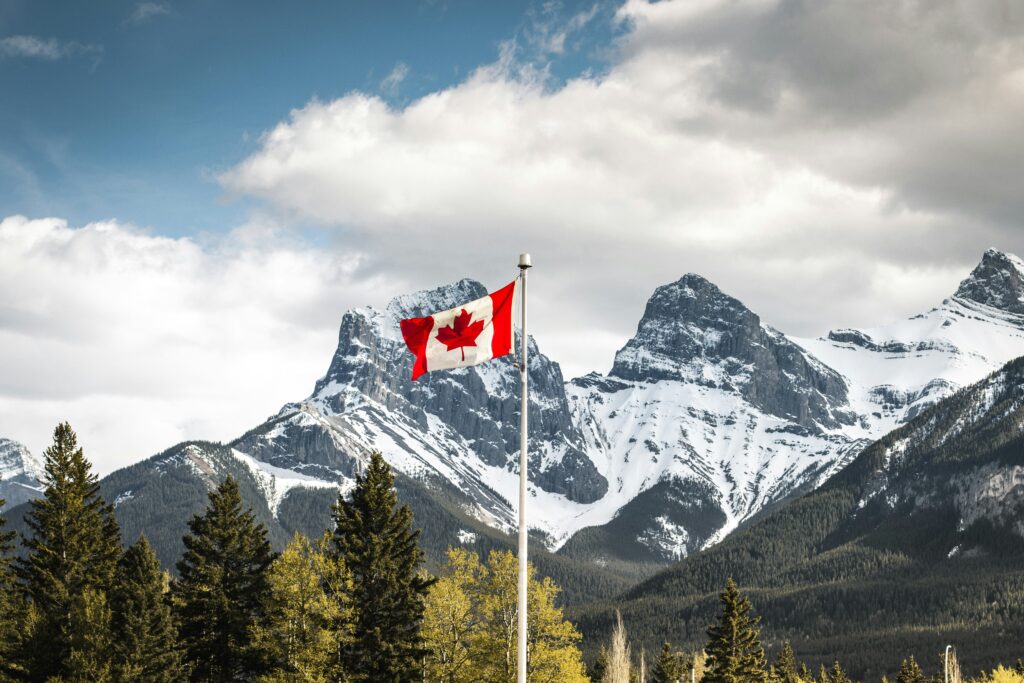
🎭 The moment I felt “behind enemy lines”
During that Sociology lecture, I sat behind two young women my age. When Dr. Lawlor spoke about Canada’s dependence on the U.S., one of them bristled and said sharply, “I would NEVER live there.”
The anger startled me. It felt personal, even though it wasn’t. I was already a quiet introvert, self‑conscious about my accent, and keeping my American roots tucked away. In that moment, hiding felt justified — as if I were behind enemy lines.
And I understood that feeling from another angle too. When I first came to Canada, I was self‑conscious about my Minnesota accent. I got teased for it, and I felt exposed. I stayed quiet about my American roots because I didn’t yet feel rooted here.
Now, forty‑five years later, I still have my Minnesota accent — but I don’t get teased. Maybe because I’m completely comfortable with my existence in Canada. I’ve evolved and found myself, and I continue to evolve.
I came to Canada at age twenty to start a new life. Maybe that’s why I chose to stay:
Canada is a great place to evolve.
🎤 The Juno Awards and a familiar pattern
This noticing surfaced again while watching the Juno Awards. Mae Martin opened the show by saying how happy they were to be back in Canada from the U.S.
Why lead with that?
Why does Canadian pride so often arrive through the doorway of the U.S.?
It’s not wrong — it’s just revealing.
🎶 If pride didn’t need comparison…
It made me wonder how the Junos might open if there were no need to reference the U.S. at all. Perhaps something like:
“Welcome to the Junos — where every corner of this country brings its own rhythm, its own language, its own heartbeat. From coast to coast to coast, we gather tonight to honour the artists who make Canada a living, breathing mosaic of sound.”
A celebration rooted in itself.
A confidence that doesn’t require contrast.
🌍 Every country has an energy
I’ve always felt that countries carry archetypal energies:
- Italy: sensuality, appetite, beauty
- Japan: precision, harmony, ritual
- France: elegance, intellect, aesthetic confidence
- Brazil: rhythm, joy, embodied expression
- The United States: power, ambition, money, innovation
- Canada: an everyman (or everyperson) energy of belonging
Canada is in a fascinating moment — a chance to differentiate from the US, ideally not through resentment or comparison, but through gratitude, clarity, and self-definition.
🌱 Gratitude as a national posture
I feel grateful to be both a Canadian and a U.S. citizen. Grateful for the freedoms, the landscapes, the safety, the opportunities, and the ability to choose my direction. I love and appreciate both countries.
Gratitude softens comparison.
It opens possibility.
It lets pride grow from the inside out.
Canada doesn’t need to be “not the U.S.”
It can simply be itself — whatever that becomes.
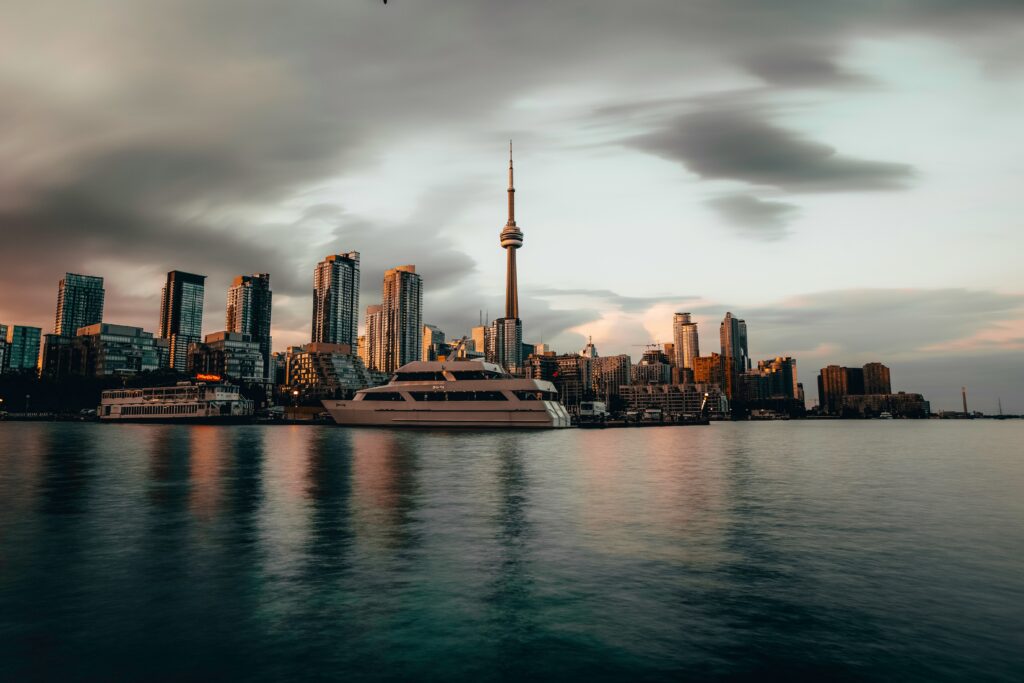
❓ Who do we want to be
I am tempted to expand into politics and war, but I won’t. This isn’t about geopolitics. It’s about identity, belonging, and the emotional habits we inherit as nations.
The question that keeps returning is simple:
Who do we want to be, without comparison, without defensiveness, without borrowed identity?
We all vibrate somewhere — individually and collectively. And in our ongoing expansion, we can be intentional. We can choose the tone we bring to our pride, the energy we bring to our culture, and the way we hold our place in the world.
Canada has the chance — right now — to answer that with clarity and confidence.
And I hope it does.
What is your wish for Canada?