
by Stacy Bremner, MA, RP
When Honesty Gets Funny
Last week I put journaling in the spotlight.
So now that everyone is journaling, it’s time to explore what naturally and honestly comes up—not just the tender insights or the polished reflections, but the things we’d rather not admit. The things we think we’ve “grown out of,” only to discover they’re still quietly running the show.
This week, the idea of disgust came up for me — unexpectedly — in relation to a conversation about humour. So I decided to delve into that. My writing reminded me that we all have blind spots, and when we stumble upon one, it becomes visible in a way that softens us, opens a doorway into deeper self‑understanding, and brings our shared humanity into the light — often in the most ironic and funny ways.
The Group Energy
In my Kabbalah group last week, the mood drifted—just a little—near politics. It happens. Even when we’re trying to rise above, to be our best selves, to stay in the realm of compassion and curiosity, we still judge what other humans are doing. Someone said she wished we could have a class on humour. And that stayed with me.
It seemed a wonderful next step with the topic of journaling. Because when we journal—really journal—and see how we actually tick, it can be astonishing… and often hilarious.

The Tiny Judge Inside
Disgust is a perfect example.
It’s not a lofty emotion. It’s not enlightened. It’s not polite.
But it’s real. And it shows up early.
I remember being four or five years old, and having very strong opinions about things. I judged clothes that didn’t match. I judged people who were overweight. I noticed the hairs on my best friend’s mother’s chin and remember it to this day.
Some of it was taught, and mostly it was instinct.
A tiny human trying to make sense of the world by sorting it into “yes” and “no,” “clean” and “unclean,” “safe” and “strange.”
We are wired from a very early age to judge and to feel disgust.
It’s primal. It’s protective.
And—when we look back at it with adult eyes—it’s often ridiculous.
Life’s Full-Circle Humour
And here’s the part that makes me laugh now: that mother I judged so harshly—the one who was overweight and had chin hairs—was probably about thirty. Thirty. Practically a child herself. She may have been in her 20’s. She had 4 kids under 5, and perhaps that is why the clothes didn’t match.
She was busy!
Meanwhile, here I am, almost sixty‑five, tweezing my own chin hairs and fretting about my weight more often than I care to admit. Life has a sense of humour if we pause long enough to notice it.
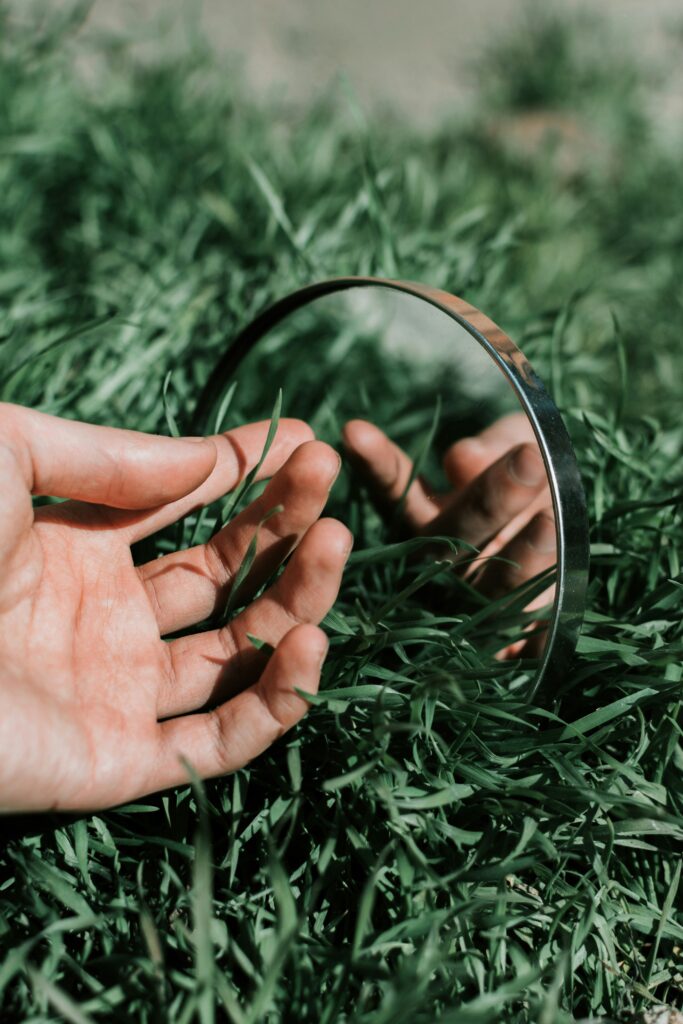
It’s almost as if the universe hands us a mirror and says,
“Remember that thing you were so sure about?
Let’s revisit it from another angle.”
This is why journaling matters.
Not because it makes us perfect, but because it lets us see the comedy in our own evolution. The way our judgments soften. The way our bodies change. The way we become the very people we once scrutinized.
Journaling can make it tender and grounded.
Something that reminds us we’re all just doing our best inside these aging, miraculous, unpredictable bodies.

And maybe that’s the humour class we actually need—the one where we laugh kindly at ourselves, at our younger selves, at the ways we’ve grown and the ways we haven’t. The one where disgust becomes a doorway into humility, and humility becomes a doorway into connection.
Life is entertaining when we let it be.
And journaling is where we catch ourselves in the act—with honesty, with curiosity, and sometimes with a smile.